In August 2026, the School of Environment of Harbin Institute of Technology (HIT), under the university's “Global Leadership: Enhancing International Perspectives Program,” organized a delegation of faculty members and students to visit the United Kingdom for academic exchanges on the frontiers of environmental science. The visit aimed to strengthen communication and connections with leading UK universities, research institutions, and relevant enterprises. In particular, the delegation engaged with high-quality educational and research institutions, including universities ranked among the top 200 in the United Kingdom, to promote mutual understanding in cutting-edge environmental research, talent development, and the sharing of research resources, while actively exploring opportunities for future academic collaboration.
Led by faculty member Zhang Zifeng and other teachers from the School of Environment, the delegation spent four days visiting the Unilever Safety and Environmental Research Center and the University of Sussex. The delegation conducted academic presentations, on-site visits to departments working on advanced technologies, and in-depth bilateral discussions on such frontier topics as Next-Generation Risk Assessment (NGRA), New Approach Methodologies (NAMs), climate change and pollutant migration in Arctic and cold-region environments, and the melting of permafrost and the secondary release of historical pollutants. Through the visit, the School gained a deeper understanding of the latest developments in environmental safety and cold-region environmental research across relevant UK universities, research institutions, and industry, while establishing a strong foundation for communication with British counterparts.
Visiting the Unilever Safety and Environmental Research Center to Learn about Advances in NGRA and NAMsFrom August 16 to 17, the delegation arrived at Colworth Science Park in Bedfordshire, UK, and visited the Unilever Safety and Environmental Research Center (SERS).
SERS is an important research platform within Unilever's global safety and sustainable science network. It brings together researchers from a range of disciplines, including cell biology, computational modeling, toxicology, and environmental science. During the exchange, experts from Unilever provided a systematic introduction to the company's more than four decades of research in non-animal safety science and offered an in-depth explanation of the core concepts of Next-Generation Risk Assessment (NGRA).
According to the experts, NGRA is an exposure-led, hypothesis-driven approach to risk assessment. By integrating New Approach Methodologies (NAMs) into product safety evaluation, it seeks to reduce reliance on animal testing. NAMs include a range of methods, such as in vitro testing, chemical analysis, and computational modeling. These methods may be used independently or in combination to achieve more precise and protective safety assessments for chemicals.
The delegation engaged in extensive academic and technical discussions with the experts, focusing in particular on Unilever's practical approaches to the safety assessment of cosmetic ingredients. The experts presented a tiered framework for applying NGRA to consumer product safety assessment. The framework includes identifying use scenarios, collecting available data, using physiologically based kinetic models to predict internal human exposure concentrations, and determining risks through the application of the bioactivity exposure ratio.
Through the visit, the delegation gained a deeper understanding of the research progress and practical applications of NGRA and NAMs in the field of chemical product safety, enhancing its knowledge of non-animal safety science and advanced approaches to chemical risk assessment. The two sides also exchanged views on technological development, research applications, and future directions for collaboration, creating favorable conditions for further academic engagement and cooperation.
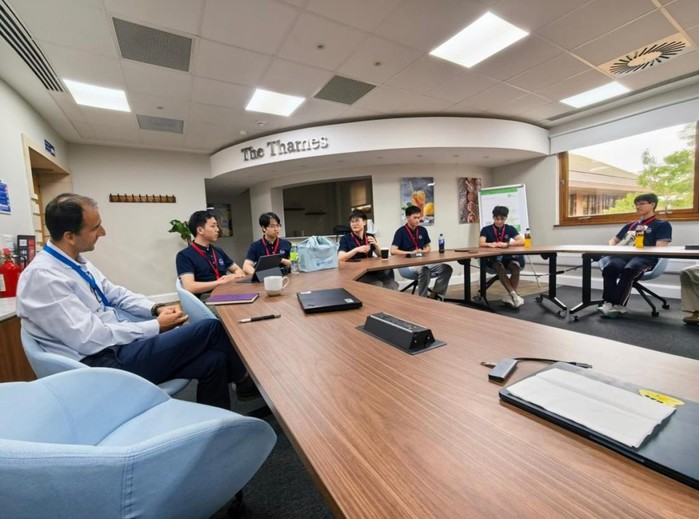
Experts from the host institution engage in discussions with the delegation
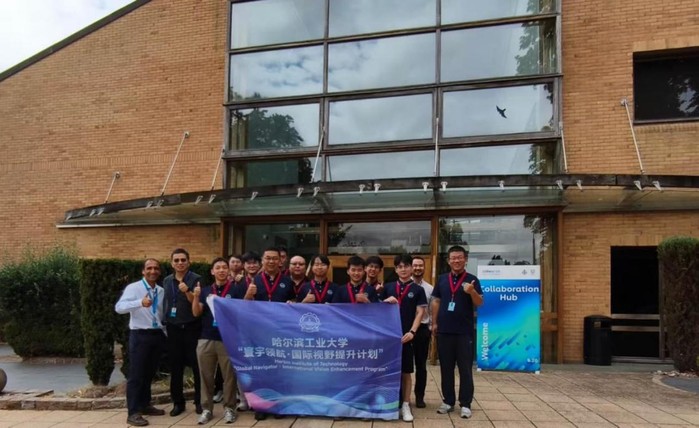
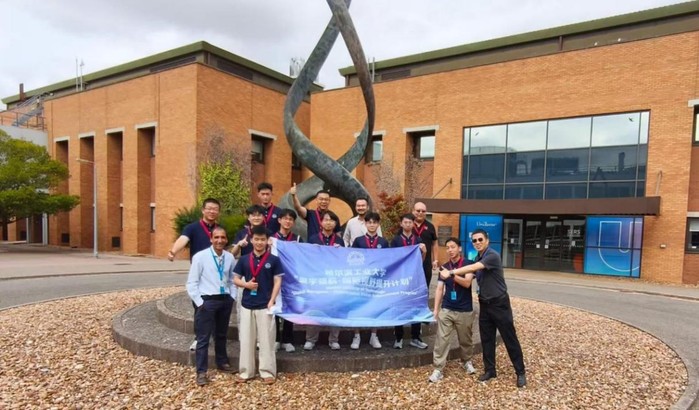
The delegation poses for a group photograph with the experts
Visiting the University of Sussex to Explore Pollutant Migration in Cold Regions and Permafrost Thaw
From August 16 to 17, the delegation visited the University of Sussex in Brighton, East Sussex, UK, where it conducted academic exchanges with international scholars, including Dr. Julian Murton, Professor of Permafrost Science.
The Permafrost Laboratory at the University of Sussex is an important international platform for research on permafrost and environmental change. Its researchers have conducted extensive field investigations and scientific studies in cold regions such as Siberia and the Canadian Arctic.
During the exchange, Associate Professor Zhang Zifeng, who led the delegation, drew on the School of Environment's research experience in polar ecological environments and climate change. Together with Dr. Julian Murton and other experts, he held in-depth discussions on the migration and transformation of pollutants in Arctic and other cold-region environments, the mechanisms coupling permafrost thaw with the secondary release of historical pollutants, and the similarities and differences among environmental issues in middle- and high-latitude cold regions.
The two sides exchanged views on changes in cold-region environments, pollutant migration and transformation, the ecological effects of permafrost, and potential areas for research collaboration. Representatives from the University of Sussex spoke positively of the exchange, noting that the two sides had engaged in in-depth and productive discussions on frontier issues related to permafrost, environmental change in cold regions, and pollutant migration. The exchange enhanced mutual understanding of the relevant research fields and ongoing academic work, and laid a solid foundation for further academic engagement and collaboration in cold-region environmental research and climate change.
The University of Sussex expressed the hope that it would continue to strengthen communication and connections with the HIT School of Environment and promote deeper cooperation in scientific exchange, talent development, joint research, and the sharing of academic resources.
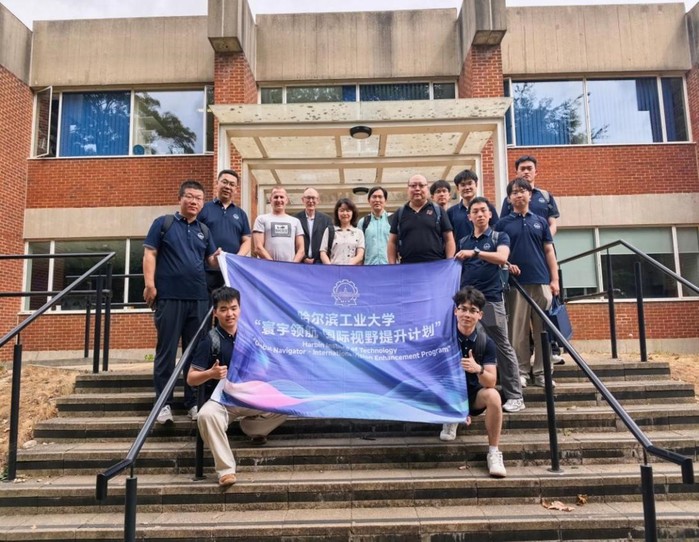
The delegation poses for a group photograph with Professor Julian Murton and other scholars following the exchange
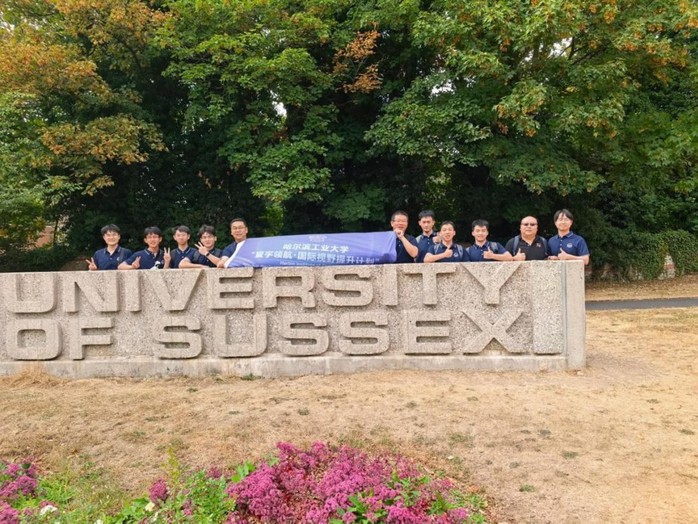
The delegation poses for a group photograph at the University of Sussex
Turning Academic Exchange into Collaboration and Expanding International Cooperation in Environmental Science
The visit to the United Kingdom was not only an academic exchange focused on the international frontiers of environmental science, but also an important step for the HIT School of Environment in expanding its international cooperation network and strengthening ties with leading UK universities and research institutions. Through visits to universities, research platforms, and corporate research centers, the delegation gained a more comprehensive understanding of research priorities, organizational models, and pathways for translating research outcomes in the field of environmental science in the United Kingdom.
At the Unilever Safety and Environmental Research Center, the delegation focused on the application of NGRA and NAMs in the safety assessment of chemicals and consumer products. At the University of Sussex, the two sides held in-depth discussions on permafrost thaw, environmental change in cold regions, and pollutant migration. Experts from different fields exchanged views from multiple perspectives, including fundamental research, technological applications, and research collaboration, creating new opportunities for further engagement between the two sides.
Associate Professor Zhang Zifeng, who led the delegation, said that the visit further broadened the international academic perspectives of the School's faculty and students and deepened the School's understanding of the research strengths and cooperation needs of UK universities and research institutions. In the future, the School will draw on its research foundation in environmental pollution prevention and control, computational toxicology, polar environmental chemistry, and climate change. It will actively promote the establishment of more stable and in-depth academic exchange mechanisms with relevant UK universities and research teams, while exploring practical cooperation in joint research, personnel exchanges, talent development, and the sharing of research outcomes.
The visit further enhanced mutual understanding between the HIT School of Environment and relevant UK universities, research institutions, and industry teams, while expanding the School's international exchange channels in environmental safety, cold-region environments, and climate change. Building on this visit, the School will continue to strengthen communication and cooperation with leading UK universities and research teams, actively explore opportunities for future academic collaboration and joint research, and contribute to enhancing the international influence of environmental science and addressing global environmental challenges.